
International shipping is one of the major cost factors in modular building projects. For overseas buyers, choosing the right transportation method can make a significant difference to the overall project budget.
At Alumodular, we have developed a new modular disassembly and packing solution that allows suitable building designs to be shipped in standard 40HQ containers instead of relying entirely on expensive flat rack transportation.
This new approach can reduce international shipping costs by approximately 50% in suitable projects, while maintaining the original building’s structural system, insulation and exterior specifications.
1. Two Transportation Solutions for Different Needs
Previously, we mainly used flat rack containers to transport large, fully assembled modular building sections.
This method offers convenience and faster on-site installation, but transportation costs can be considerably higher than standard container shipping.
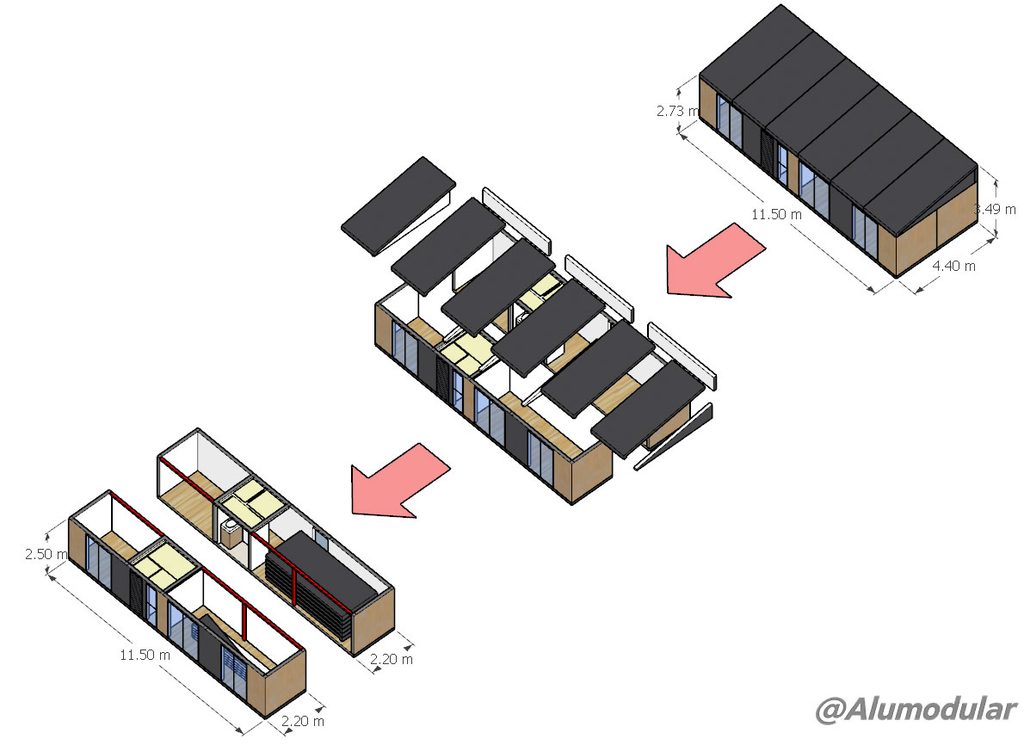
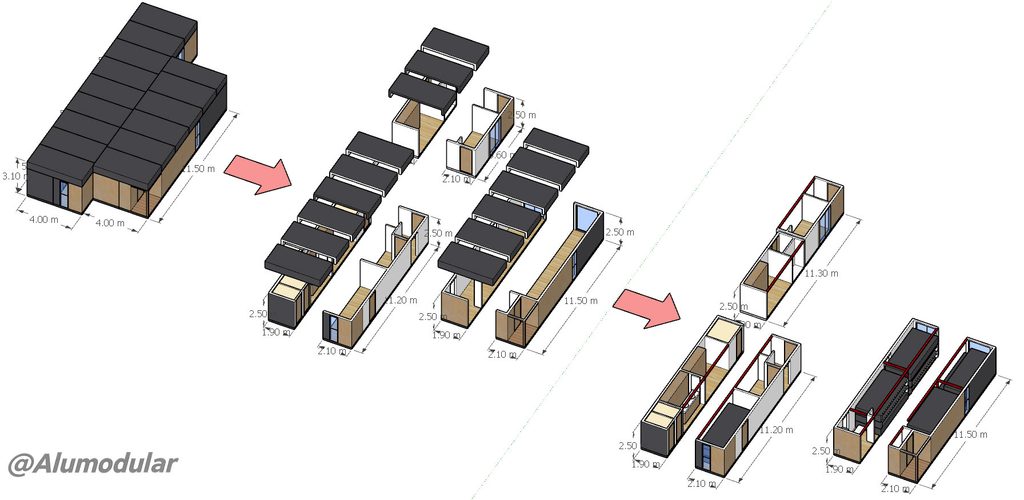
To provide customers with a more economical option, we introduced a new solution that divides modular buildings into transportable sections, including the main body and roof components.
These components can then be efficiently packed into standard 40HQ containers.
2. How Does the New 40HQ Shipping Method Work?
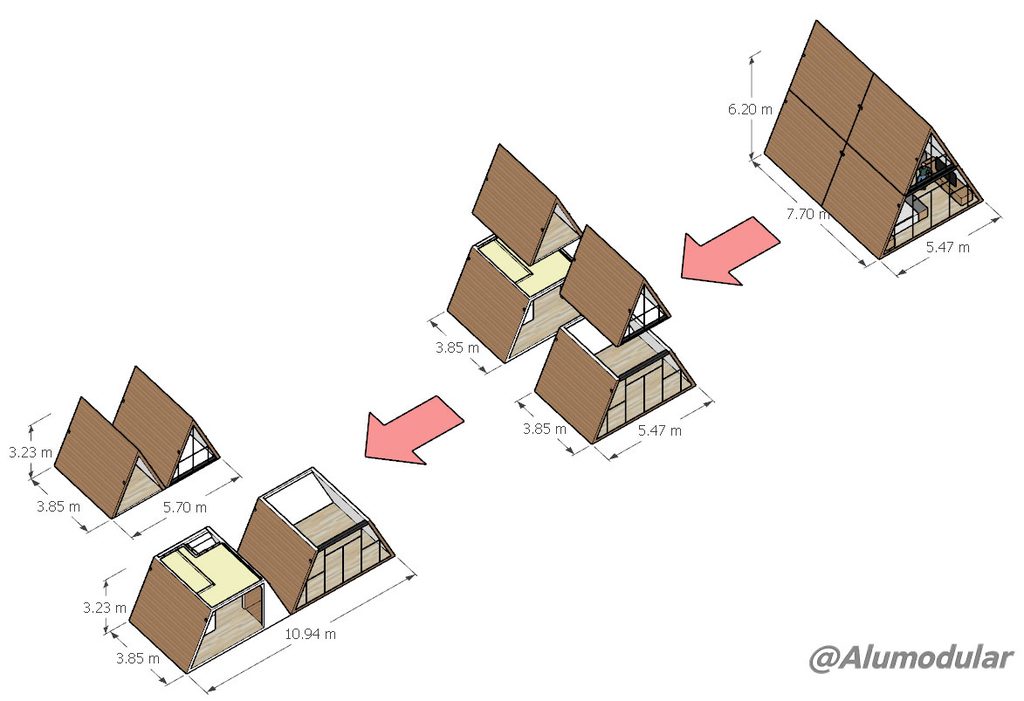
Our new transportation solution generally involves three steps:
- Step 1 – Modular Disassembly
The building is divided into smaller transportable components according to its design and structural requirements. Main body sections and roof components are separated where necessary.
- Step 2 – 40HQ Container Loading
The components are carefully arranged and packed into standard 40HQ containers to maximize loading efficiency and protect the building materials during transportation.
- Step 3 – On-site Reassembly
After delivery, the components are unloaded, positioned and reconnected according to the installation drawings. Structural connections, insulation continuity and waterproofing details are completed during installation.
Different building designs require different packing arrangements, and our team develops suitable transportation plans according to each project.
3. Flat Rack vs. 40HQ: What Are the Differences?
Both transportation methods have their own advantages. The right choice depends on order quantity, project budget and installation requirements.
| Comparison | Flat Rack | 40HQ Disassembly |
| Shipping cost | Higher | Approximately 50% lower in suitable projects |
| Transportation | Larger assembled sections | Separated building components |
| On-site assembly | Less assembly work | Additional reassembly required |
| Installation time | Generally faster | Requires additional time |
| Local labor | Relatively lower | Additional assembly labor |
| Best suited for | Small orders | Large-volume projects |
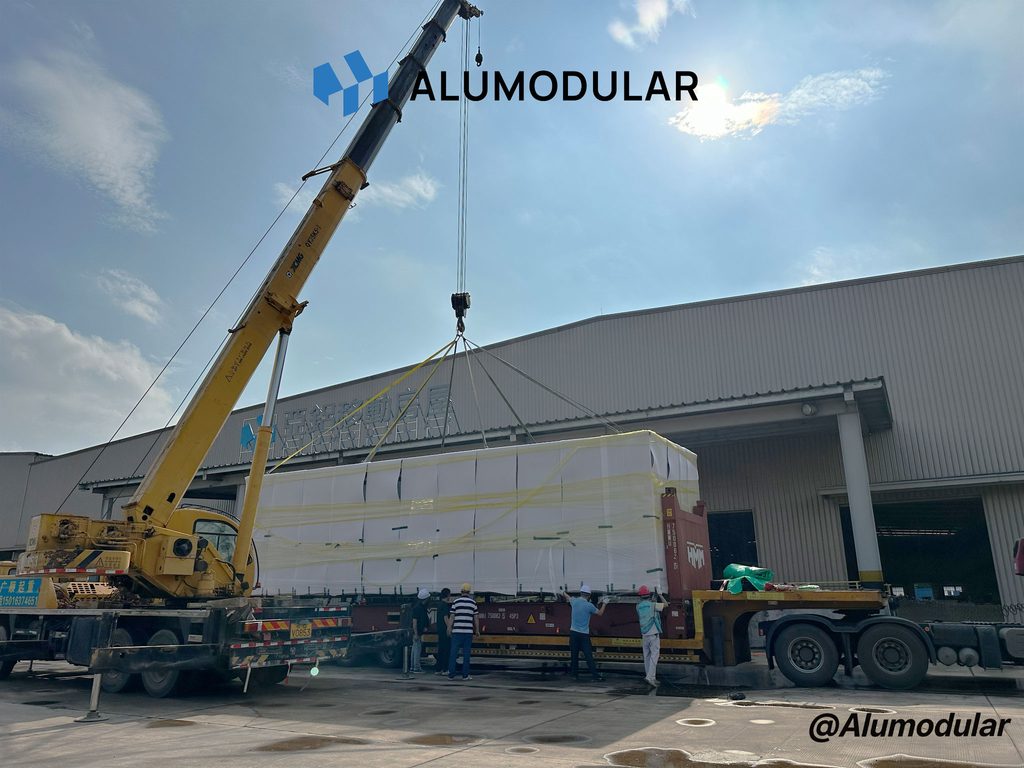
Flat Rack Transportation – Faster Installation
Flat rack transportation is particularly suitable for customers ordering one or a few modular homes
Since the main building sections arrive more fully assembled, fewer assembly operations are required at the destination. This helps reduce local labor requirements and speeds up installation.
Although the shipping cost is higher, it can be a more convenient and practical choice for smaller orders.
40HQ Transportation – Better Savings for Large Projects
For projects involving multiple modular homes, our 40HQ disassembly solution can offer significant transportation cost advantages.
Using standard shipping containers helps reduce international freight expenditure, especially when transporting multiple units.
The main consideration is the additional labor and installation time required for reassembly at the destination.
Customers should therefore consider both freight savings and local installation costs when comparing the total project budget.
4. Does Disassembly Affect Building Quality?
A common question is whether dividing a modular building into smaller components affects its original quality.
At Alumodular, our transportation solution changes the way buildings are divided, packed and assembled. It does not mean compromising the original building specifications.
Our modular buildings continue to feature:
- Steel structural framing for the main load-bearing system.
- Aluminum alloy exterior wall systems.
- Insulation materials such as rock wool or polyurethane, according to project requirements.
- Project-specific structural connections and waterproofing details.
All necessary connections and finishing details are completed according to the approved installation drawings and project specifications.
Our goal is to make international transportation more economical while maintaining the agreed building quality and performance.
5. Which Transportation Method Is Right for Your Project?
At Alumodular, our recommendation is simple:
- Small orders: Choose Flat Rack. Ideal for one or a few houses, with less on-site assembly work and faster installation.
- Large projects: Choose 40HQ. Ideal for multiple units, helping reduce overall international freight costs through more efficient container loading.
Every project is different. Our team can evaluate your building design, order quantity, destination and installation conditions to recommend the most suitable transportation solution.
Looking for a More Cost-Effective Shipping Solution?
Whether you are planning a single modular home or a large-scale residential or hospitality development, Alumodular can help you find the right balance between transportation costs, installation efficiency and building quality.
Contact Alumodular today to discuss your project and get a customized modular building and transportation solution.
Website: www.alumodular.com